


Support+ Lifting Belts
A belt you can brace against. Firm through the back, contoured so it sits where you put it, and built to survive the sessions you actually train.

Couldn't load pickup availability
Order before 2pm AEST and it ships today — arrives by Thursday, October 15th
The detail
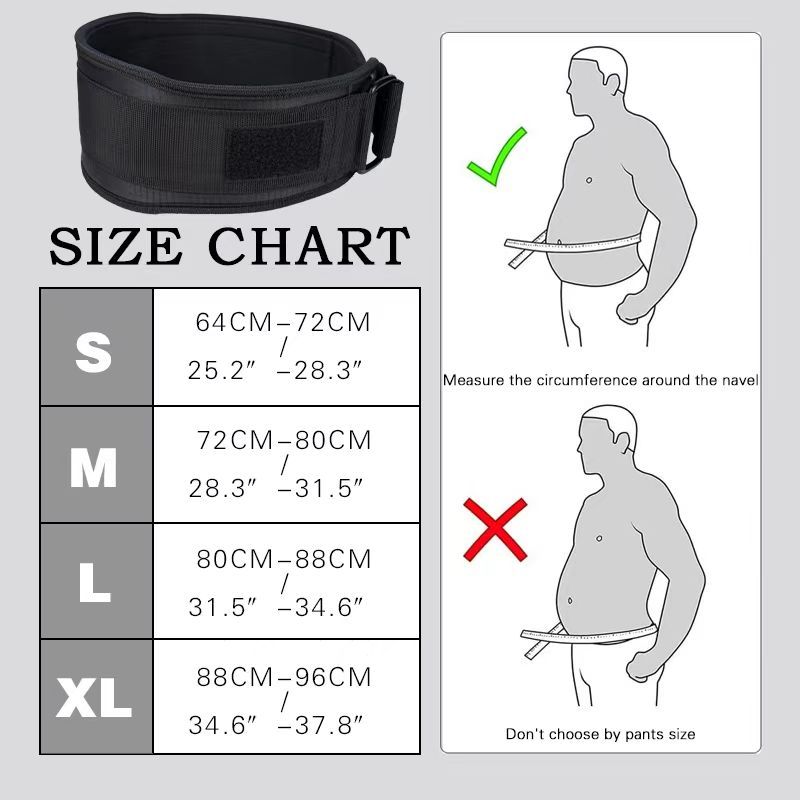
Measure around your waist at the navel — not your pants size.
- S — 64–72 cm
- M — 72–80 cm
- L — 80–88 cm
- XL — 88–96 cm
Between sizes? Take the larger one — the velcro overlap covers the gap.
Heavy compounds. Squats, deadlifts, carries, and metcons where you want something to brace into.
It is training equipment, not a medical brace.
Velcro overlap sets the tension, the quick-release buckle locks it. Undo it between sets without rethreading anything.
Wipe it down after sweaty sessions and let it air dry. Do not machine wash it.
Ships same day on orders before 2pm AEST. Australia 3–5 business days standard, 1–3 express. International is tracked, 7–15 business days.
30 day returns on unused gear in its original packaging, return postage at your cost.
Absolutely! We stand behind the quality of our products. This item comes with a 1-year warranty against manufacturing defects. If you experience any issues, please reach out to our support team.
Support+ Lifting Belts


Before you buy
Measure around your waist at the navel, then use the chart: S 64–72 cm, M 72–80 cm, L 80–88 cm, XL 88–96 cm. Do not go by your pants size — it will put you a size out.
Both. The velcro overlap sets the tension and the quick-release buckle locks it in, so you can pop it open between sets and get the same tension back.
It is firm through the lower back and softer at the edges. If you compete in powerlifting and want a 10 mm lever belt, this is not that — it is a support belt for training.
Yes. That is what the breathable panel and quick-release are for — on for the lifting, off for the rest.
We do not sell it for that. It is training equipment, not a medical brace. If you have a back injury, talk to your physio first.